
The Bigger Isn’t Always Better: Why Realism Feels Different
- by Sims Zhou
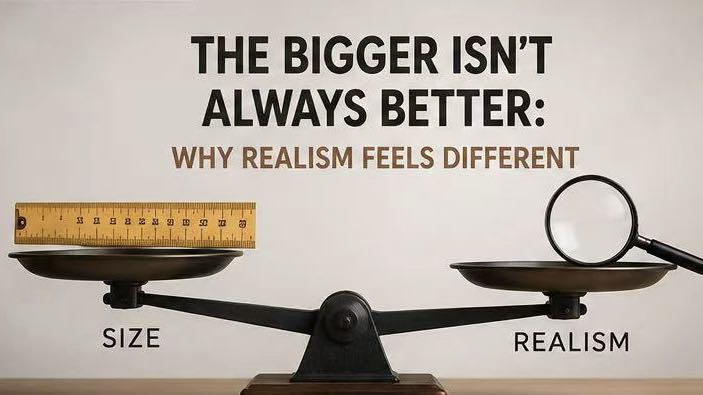
If you spend enough time in the gay community, you’ll notice how often size becomes part of the conversation. Bigger, thicker, longer — these words show up everywhere, from dating profiles to social media.
But is bigger really what makes a toy feel better? In my experience, not necessarily. When it comes to realistic toys, the details can matter just as much as the measurements. Proportion, texture, flexibility, weight, and the way a design resembles a real body can create a completely different impression.
Why Size Gets So Much Attention
Let’s be honest: size is easy to talk about. You can put a number next to it, compare it with something else, and immediately understand why a product might stand out. In gay male spaces, where physical appearance and attraction are often discussed openly, size can easily become part of the fantasy.
Online, this becomes even more obvious. A larger measurement can grab attention before you even know anything else about a product. A dramatic photo can get more reactions, while an exaggerated size can become a joke, a flex, or simply something people are curious about.
There’s nothing wrong with that. Some people genuinely prefer bigger toys, and size can absolutely be part of what makes a product attractive. But there’s a difference between something being impressive and something being right for you. A toy can be huge and still not have the shape, texture, or flexibility you are looking for. Another one might have a more moderate size but feel much more convincing because the different parts of the design work together. That’s why I think it’s worth looking beyond the number, especially when you’re specifically interested in realism.
What Makes a Toy Feel Realistic?
When people hear “realistic,” appearance is usually the first thing they think about.
"Does it look natural?"
"Does the shape resemble human anatomy? "
"Are the details convincing? "
Those things matter, but realism is more than simply making a product look detailed. A realistic design depends on how different elements come together. The proportions need to make sense, the curve should feel intentional, the surface can have texture without looking artificial, and the material needs enough flexibility to respond to pressure while still maintaining its structure.
Think about a photograph compared with a cartoon. A cartoon can exaggerate almost everything and still be recognizable. A photograph doesn’t need to exaggerate anything because its appeal comes from how closely it resembles something you already know. Realistic toys work in a similar way. They don’t necessarily need to create the biggest or most exaggerated version of anatomy. Instead, they try to capture the details that make a body feel familiar. And that familiarity can be surprisingly important.
The Four Details That Can Change the Impression

If size isn’t the whole story, what should you actually pay attention to? For me, four things stand out: proportion, texture, flexibility, and weight.
-
Proportion
A real body isn’t defined by one measurement. Length and girth work together, while curves, the head, the base, and the overall silhouette all contribute to how a body looks. That’s why simply making a toy longer or thicker doesn’t necessarily make it more realistic. Imagine taking one feature of a person and exaggerating it while leaving everything else unchanged. It might look dramatic, but it probably wouldn’t look natural.
When I look at a realistic product, I pay attention to the overall shape rather than immediately looking at the measurement. Does the head match the shaft? Does the curve make sense? Does the base fit naturally with the rest of the design? These details may seem small, but together they create the overall impression.
-
Texture
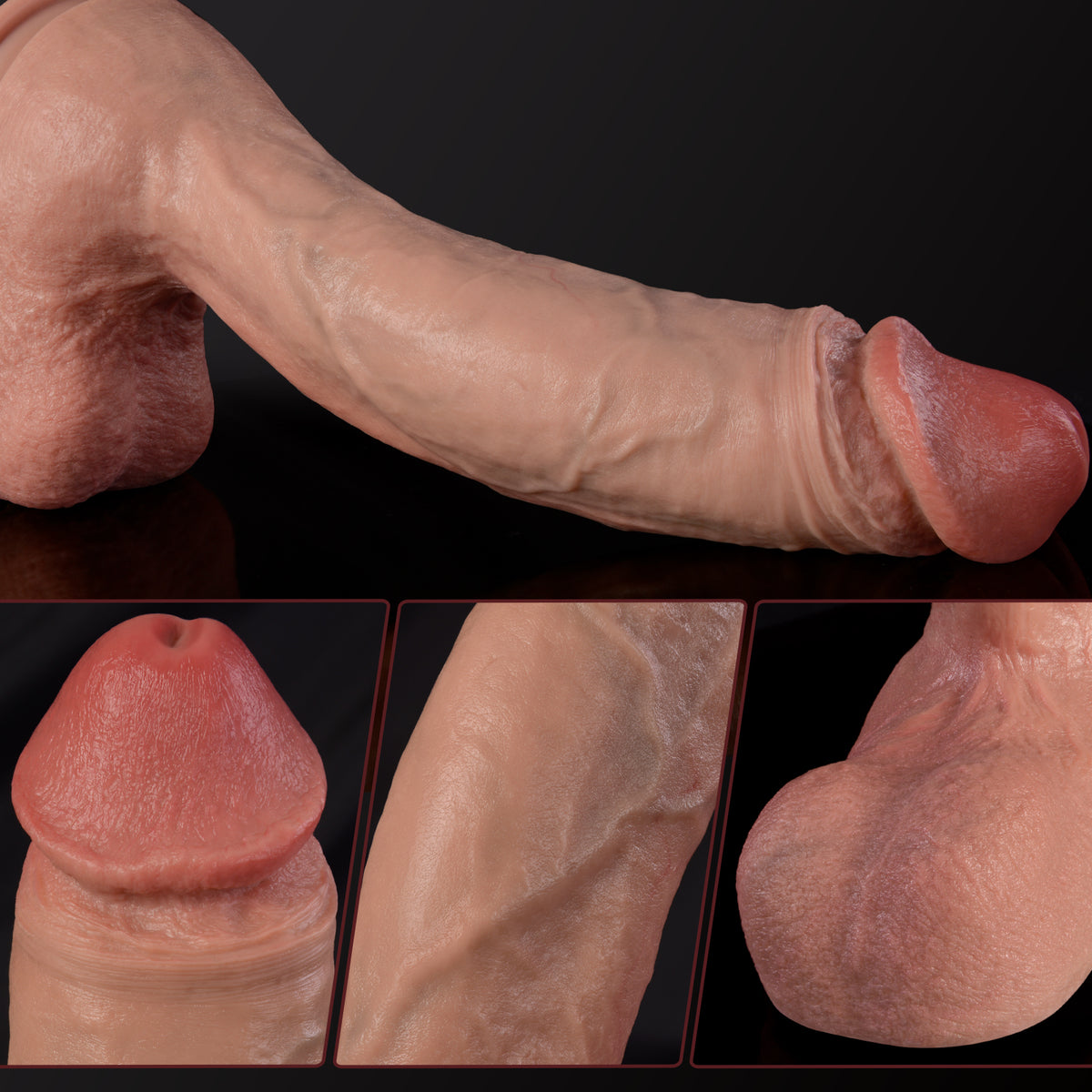
Texture is another detail that can easily get overlooked. A completely smooth surface can look clean and polished, but a surface inspired by natural skin can create a different visual and tactile impression. Small details can make something feel less like a generic object and more like a design based on an actual body.
But more texture doesn’t automatically mean more realism. It has to work with the rest of the design. If every possible detail is exaggerated, the result can actually feel less natural. The goal isn’t to add details simply because realistic products are supposed to have them. The details should feel intentional.
-
Flexibility
Then there’s flexibility. Human anatomy isn’t completely rigid, so a realistic product needs some ability to respond to pressure and movement. If something is extremely hard, it can feel artificial. If it is too soft, it can lose its shape and structure. Finding the balance between softness and support is part of what makes a realistic design feel more natural.
This is also something that photographs can’t really communicate. You can see the shape of a product online, but you can’t fully understand how a material responds just by looking at a picture. That’s why material construction matters when you’re trying to create realism.
-
Weight
Weight is probably one of the less obvious details. It isn’t something people usually put at the top of their shopping list, but it can affect how substantial a product feels. A product with realistic proportions and appropriate weight can feel more substantial than something that is simply large but light and hollow.
Again, it comes back to the same idea. Realism isn’t about maximizing one number. It’s about making different parts of the design work together.
Why Familiarity Can Feel Different
There’s another reason realistic designs can be appealing: familiarity.
For some people, that familiarity comes from seeing a shape that resembles what they are attracted to in real life. For others, it might be the proportions, the texture, or simply the feeling that the design was inspired by an actual body rather than an imaginary measurement.
That doesn’t mean realistic toys are automatically better. Fantasy has its own appeal. Some people specifically want something exaggerated because it doesn’t look realistic. That kind of design can be fun precisely because it goes beyond everyday anatomy. But if realism is what you’re looking for, accuracy becomes more important. A product that is 10 inches long isn’t automatically more immersive than one that is 7 or 8 inches. If the proportions feel strange or the material doesn’t respond naturally, the extra size might not add much to the overall experience. Sometimes, it can even distract from it.
That’s why I think the more interesting question is not simply, “How big is it?” It’s “How believable does it feel?”
Why 1:1-Inspired Designs Feel More Personal
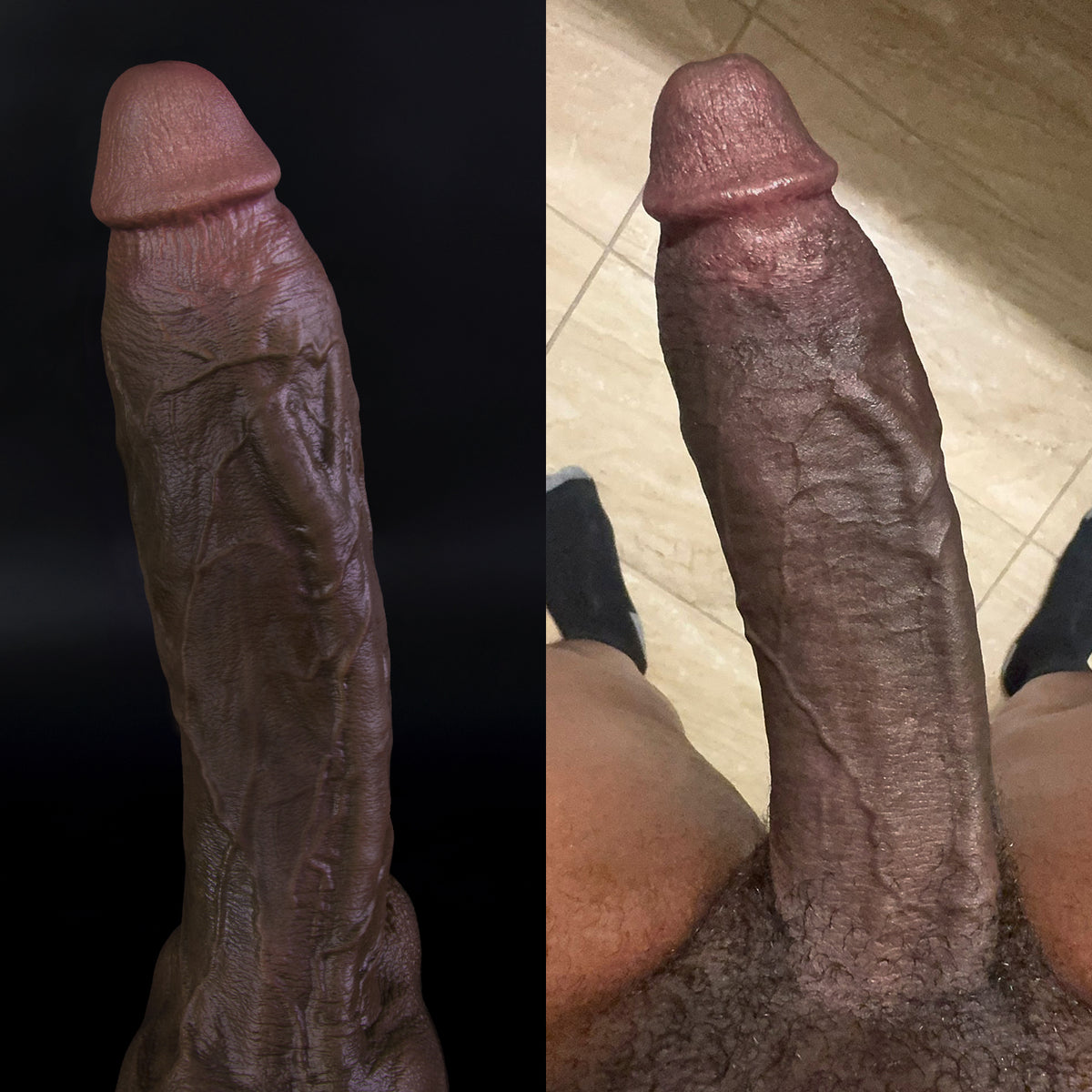
This is where the idea of 1:1 inspiration becomes especially interesting. Instead of starting with an arbitrary measurement and trying to make a product as large as possible, designers can use real human proportions as a reference. That’s one of the ideas behind creator replica toys.
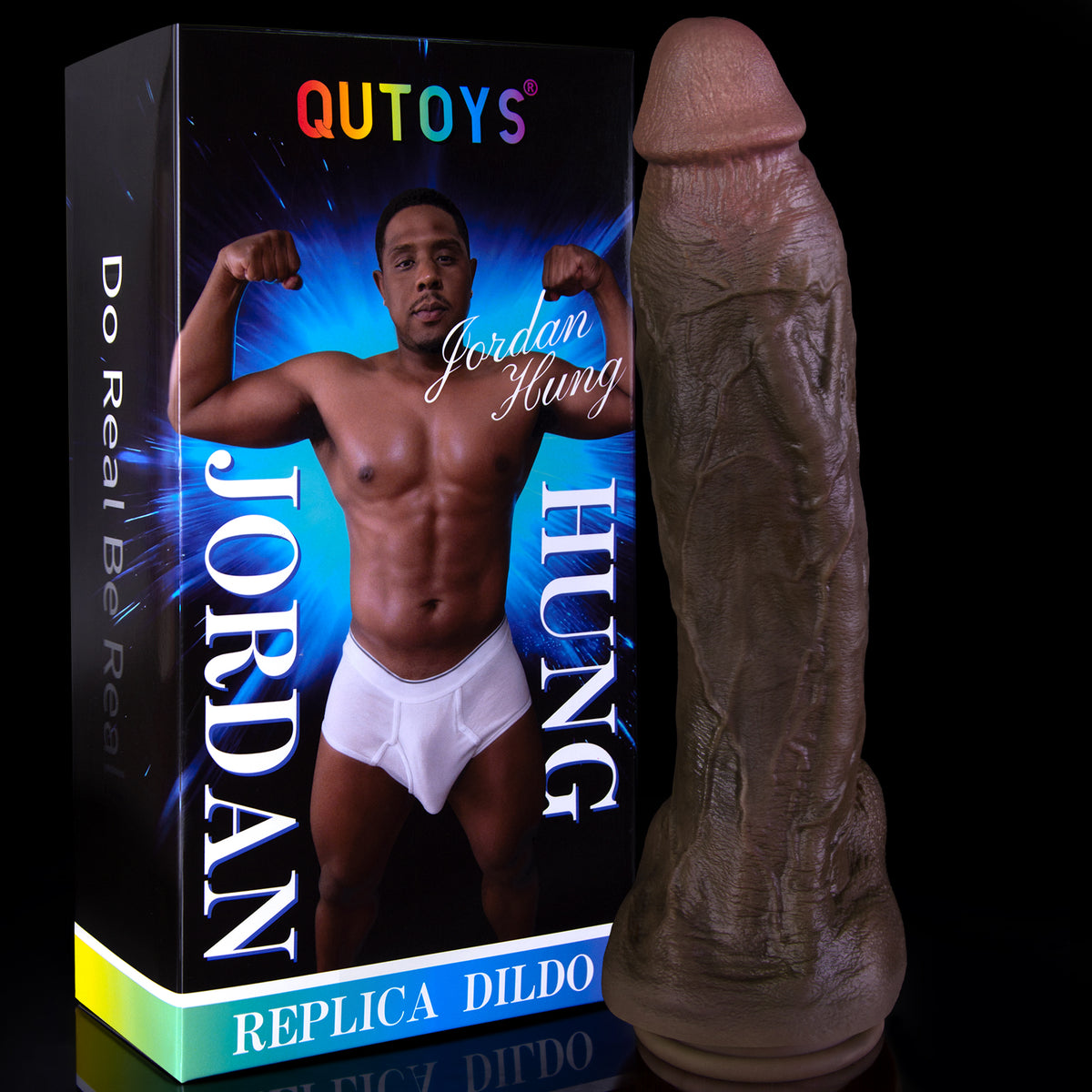
At QUTOYS, many products are inspired by real creators, with the intention of preserving the physical characteristics that make each person recognizable. The QUTOYS bestseller collection includes creator-inspired designs such as HIMBOHYENA, Jordan Hung, Dongkinger, Big Dick Buddy, and Dan Benson, alongside other realistic and fantasy designs.
What makes these products interesting isn’t simply their measurements. There is already a person behind the design. If you’ve seen a creator before, you already have an image in your mind. You recognize their body, their proportions, or certain physical characteristics. A product inspired by that person is therefore connected to something familiar instead of being completely anonymous. That can create a different kind of appeal.
Someone might be attracted to a particular creator because of their overall appearance rather than one specific measurement. In that case, reproducing the recognizable characteristics of that body can be more meaningful than simply making a product bigger. This is also why creator replicas don’t have to compete with fantasy toys. Fantasy designs can be about imagination and exaggeration, while creator-inspired designs can be about familiarity and connection. Neither approach is better. They simply answer different kinds of desire.

What to Look For Beyond the Measurement
If you’re shopping for a realistic design, I think it helps to look at the whole product instead of going straight to the size chart.
Start with the shape.
Does everything look proportionate? Does the design resemble a body rather than just a collection of exaggerated features?
Look at the material.
QUTOYS describes its realistic products as using platinum-grade silicone, with some designs featuring a dual-layer construction that combines a softer outer layer with a firmer inner core. That construction is intended to create a balance between a softer surface and enough internal support to maintain the shape.
Then look at the smaller details.
Pay attention to the surface, the curves, and the transitions between different parts of the design. Realism often comes from dozens of small decisions rather than one dramatic feature.
And finally, think about your own preference.
A realistic product isn’t automatically right for you just because it looks realistic. Your preferred size, comfort, material preference, and the sensations you enjoy still matter. Realism should support what you want, not decide it for you.

Realism Doesn’t Mean Less Exciting
I think there is sometimes a strange assumption that realistic automatically means boring. I don’t see it that way.
Think about attraction in real life. Most people aren’t attracted to someone simply because they have the most extreme body possible. Usually, it’s a combination of things: the way they look, their proportions, their expression, their personality, and the little details that make them recognizable.
A realistic toy can work in a similar way. It doesn’t necessarily have to compete with the biggest or most exaggerated design. Instead, it can create a more complete impression. That’s why realism can be exciting even when the measurements aren’t extreme. Sometimes, the familiar thing is exactly what makes the fantasy work.
So, Is Realism More Important Than Size?
For some people, absolutely. For others, size will always be the main attraction. And that’s completely fine.
The point isn’t that everyone should choose a realistic toy over a larger one. There isn’t one universal definition of what makes a toy attractive, and there doesn’t need to be. If size is what catches your attention, that’s part of your preference. If you care more about the shape, texture, flexibility, or overall appearance, those things matter too. And if what you really want is a combination of everything, then looking at the entire design makes more sense than judging it by one measurement.
That’s also why variety matters. At QUTOYS, the collection includes realistic, creator-inspired, thick, large, soft, and fantasy designs. Products such as HIMBOHYENA and other creator replicas offer something connected to recognizable bodies, while other designs allow people to explore something much more imaginative. There doesn’t need to be one winner. The bigger idea is that you don’t have to follow someone else’s definition of what makes a toy exciting. You can choose what actually feels like your type.
And maybe that’s what gets lost when the conversation becomes too focused on size. We start comparing instead of choosing. We ask what’s bigger instead of asking what we actually like. Once you take the number away, the question becomes much more personal: What kind of experience are you actually looking for?
The Bottom Line
Size gets attention, but realism comes from the details — proportion, texture, flexibility, weight, and familiarity. There’s no universal “best” size. The right choice is the one that fits your preferences and feels right to you. If you want to explore realistic and creator-inspired designs, take a look at the QUTOYS collection and find the one that feels most like your type.
Recent Posts